
The Importance of Consistent Strategic Planning for Organizational Success

Why Ongoing Strategic Planning is Key to Long-Term Growth and Stability
In today's dynamic and rapidly evolving business environment, organizations that fail to adapt quickly to trends, consumer behavior shifts, or market changes risk falling behind. Relying on a reactive approach can often lead to missed opportunities, confusion, and disjointed efforts across teams. The solution to these challenges lies in strategic planning a cornerstone for sustainable success.
However, many organizations treat strategic planning as a once-a-year activity, revisiting it only when faced with a crisis. The truth is, consistent strategic planning, which is proactive and iterative, is the key to maintaining growth and stability in the long run.
In this blog, we’ll discuss why continuous strategic planning is essential, how it benefits your organization, and actionable ways to integrate it into your processes.
What is Strategic Planning?
Strategic planning involves defining your organization’s direction, setting goals, and crafting strategies to achieve them. It includes assessing current operations, identifying opportunities and risks, and aligning resources for long-term success.
While it's critical to have a strategic plan in place, the most successful companies understand that it’s not a "set and forget" process. Strategic planning must be an ongoing, flexible process that regularly assesses internal and external factors, adjusts goals, and aligns teams toward a common purpose.
Why Consistent Strategic Planning is Vital for Success
Strategic planning is more than just a framework for setting goals. It's a continual process that provides direction, adaptability, and long-term sustainability. Below are six key reasons why consistent strategic planning is essential:
1. Provides Direction and Focus
A consistent strategic plan gives clarity and alignment across all levels of the organization. Without it, teams may drift in different directions, each interpreting goals and priorities differently.
How it helps:
Establishes clear objectives
Guides resource allocation
Minimizes distractions
Reduces misalignment between teams

2. Ensures Adaptability in a Changing Environment
The business landscape is constantly evolving, with new technologies, regulations, and competitive threats emerging regularly. Without a consistent strategic planning process, your organization may miss important shifts and fail to adapt on time.
How it helps:
Ensures the organization stays proactive
Provides flexibility to pivot when needed
Identifies potential risks early
3. Enhances Long-Term Sustainability
While it’s tempting to focus on short-term goals, consistent strategic planning forces organizations to think long-term. This ensures that actions today align with broader, sustainable growth goals.
How it helps:
Positions the organization for long-term success
Encourages investment in talent, technology, and market expansion
Balances short-term wins with future growth

4. Facilitates Alignment and Collaboration Across Teams
Strategic planning is a cross-functional effort that brings all departments together. Consistent planning ensures that teams remain aligned and work toward shared objectives.
How it helps:
Encourages interdepartmental collaboration
Creates shared accountability
Minimizes miscommunication and conflict
5. Drives Decision-Making and Resource Allocation
With a clear strategic plan, organizations can make informed decisions about where to allocate resources, ensuring that every dollar and hour spent aligns with overarching goals.
How it helps:
Improves decision-making by linking resources to priorities
Prevents wasteful spending on non-aligned initiatives
Maximizes efficiency and value
6. Strengthens Organizational Resilience
Strategic planning helps build resilience by preparing the company for challenges before they arise. Regular assessments enable organizations to anticipate risks and develop strategies to mitigate them.
How it helps:
Identifies potential risks early
Establishes crisis management strategies
Fosters a culture of innovation and adaptability
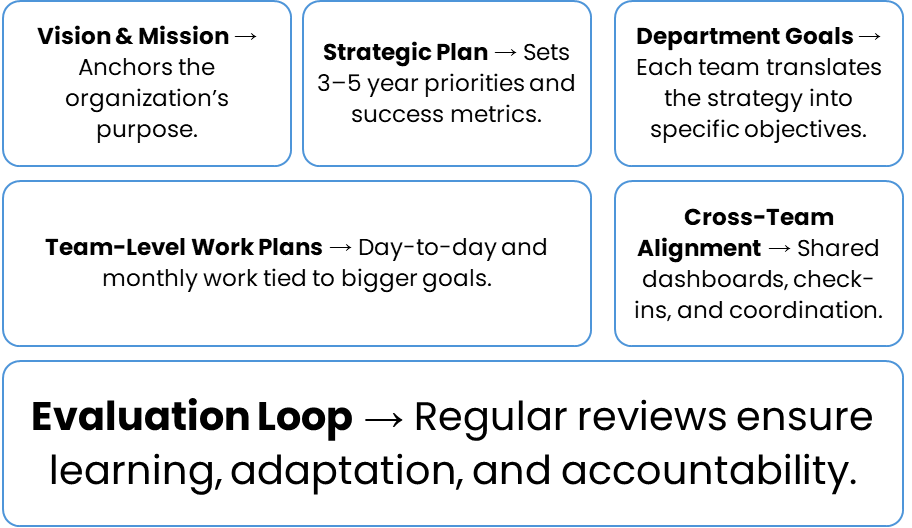
Key Stages of Strategic Planning:
Conclusion: A Commitment to Consistency Drives Long-Term Success
Strategic planning is not a one-time event; it’s a dynamic, ongoing process. Organizations that commit to regular, consistent strategic planning gain direction, build resilience, and drive sustainable growth. By continuously refining goals and adjusting strategies based on real-time insights, organizations can navigate market shifts and remain focused on their long-term objectives.
By embracing a culture of consistent strategic planning, your organization can adapt, innovate, and thrive in the face of future challenges.

Ready to boost your organization’s strategic planning efforts? Contact us for continuous strategic planning and set your business on a path to long-term success!
Sources
Harvard Business Review. (2020). "Strategic Planning in the Age of Agility."
McKinsey & Company. (2021). "Leading Through Uncertainty: Strategic Planning for the Future."
Gartner. (2020). "The Importance of Agile Strategic Planning."
Bain & Company. (2021). "How Companies Should Approach Strategic Planning for Growth."
Deloitte Insights. (2021). "Innovation in Strategic Planning: Leading Companies’ Approach to Long-Term Success."


Comments